Seven signs your tarmac driveway needs replacing
Cracks, potholes and puddles do not always mean a new driveway. Here are the seven signs that point to a relay rather than a repair, and what the work involves if it comes to that.
- Surface: Tarmacadam
- Repair suits: Small damage in one place
- Relay suits: A base that has given way
- Get a price: Free quote from Eddie
Most tarmac driveways do not fail all at once. They give warning signs over a few years, and the trick is knowing which signs mean a repair will do and which mean the driveway needs to come up and go down again. In the South East, with the rain we get and the frost most winters, small problems turn into big ones faster than people expect.
This guide covers what to look for. It will not tell you for certain what your driveway needs, because that depends on what is happening underneath. Eddie will tell you that when he sees it.
Repair, new surface or full relay
There are really three answers to a tired tarmac driveway, and they suit different problems.
- A repair. Cutting out and filling a damaged patch, fixing a broken edge or sealing a crack. Right for damage that is small and in one place.
- A new surface. Laying fresh tarmacadam over the old once it has been prepared. Right when the base underneath is still solid and the trouble is only on top.
- A full relay. Digging out the old surface and the failed base, building a new base, sorting the drainage and laying new tarmac. Right when the ground underneath has given way.
The mistake people make is putting a new surface over a base that has already failed. It looks well for a while, then the same cracks and dips come back through. The base decides which of the three you need, not the look of the top.
Seven signs to look for
Cracks spreading like a web
One or two straight cracks are common and can usually be repaired. Cracks that join up into a pattern like crocodile skin are different. That pattern tends to mean the base has lost its strength and the surface is flexing every time a car goes over it. Filling the cracks will not fix the cause.
Potholes that keep coming back
A pothole that has been patched and comes back in the same place, or right beside it, is telling you something. Usually water has got under the surface and washed out the base, leaving a gap that the patch sits over. Until the base is fixed, the hole will keep returning.
Water lying after rain
A driveway should shed water. If puddles sit in the same spots long after the rain stops, the driveway either has no fall in that area or has sunk there. Standing water softens the surface and, in a frost, freezes and opens it up. A small low spot can sometimes be lifted and relaid. Water lying across a large part of the driveway usually points to a relay with proper drainage.
Edges breaking away
Edges go first on a lot of driveways, especially where there was no kerb or edging put in. Once the edge starts to crumble, the damage works inward. A short broken section is a repair. If the edges are going all round and the surface behind them is loose too, it is more than an edge problem.
Sinking, dips and ruts
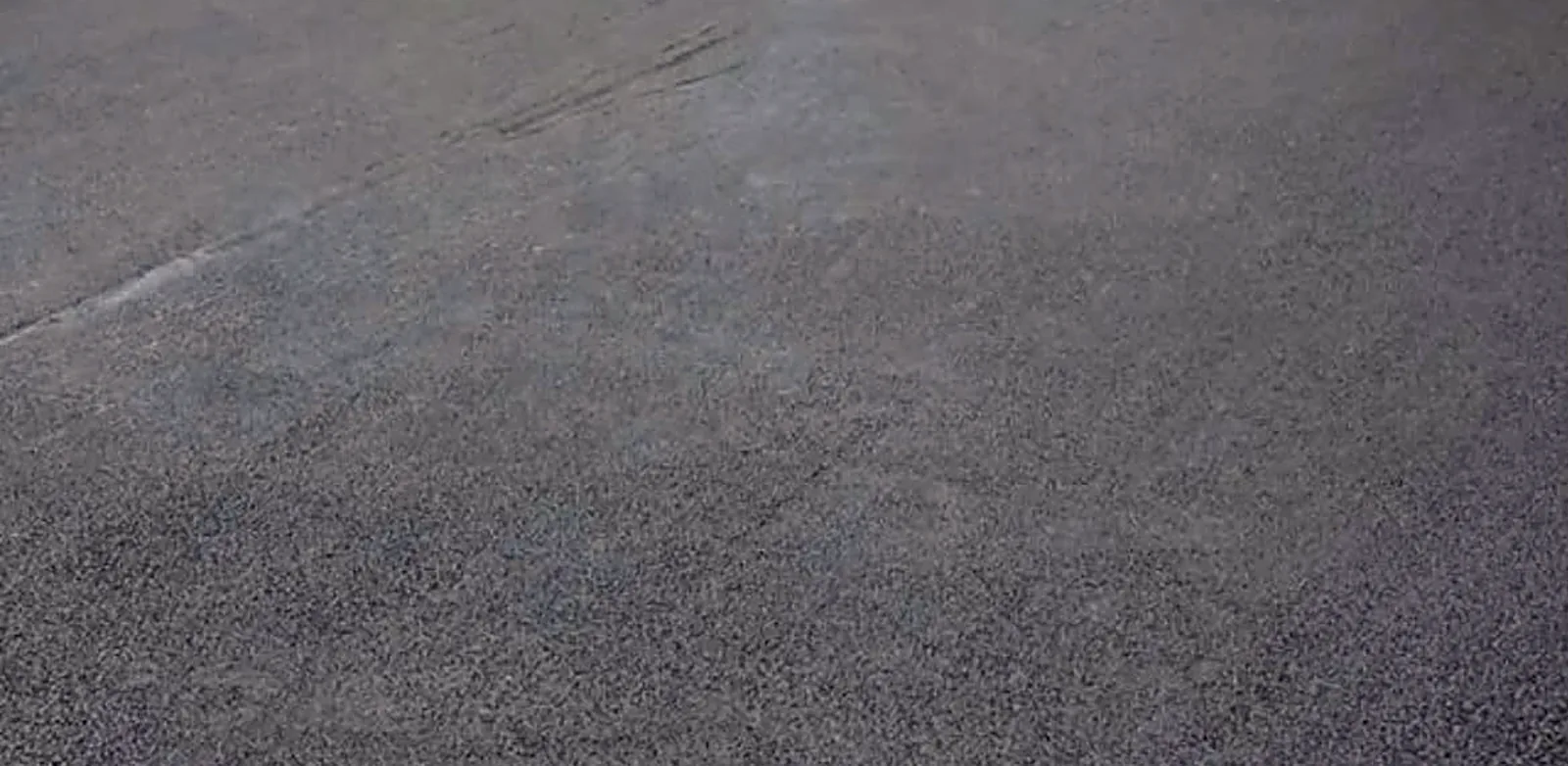
Look along the driveway at a low angle. Dips where the car wheels run, or an area that has sunk, mean the ground underneath was not compacted well enough or has moved. You cannot push a sunken section back up. The only fix is to dig it out and build the base again.
Weeds growing through the middle
Weeds at the edges are normal and easy to deal with. Weeds and grass coming up through the middle of the driveway mean the surface has opened enough for soil and roots to get in. The roots then lift and loosen the tarmac further. On a sound driveway this is rare.
An old driveway with a history of patches
Age on its own is not a reason to replace a driveway. A well laid one can go for many years. But if the driveway is old, has been patched several times and is now showing two or three of the signs above, the money going into repairs each year would be better spent on doing it once, properly.
A quick look you can do yourself
Before you ring anyone, take ten minutes and walk the driveway.
Look at the cracks
Single lines, or joined up into a web.
Check after rain
Note where water is still lying an hour after it stops.
Count the patches
Note any hole that has come back after being filled.
Walk the edges
Solid, or breaking off in pieces.
Look along it low down
Watch for dips, ruts or a sunken area.
If more than one of these turns something up, it is worth getting someone out to look.
What a full relay involves
If it does turn out to need a relay, the job follows the same order every time.
Look and measure
Eddie walks the site, checks the levels and works out where the water needs to go.
Dig out
The old tarmac and the failed base come out and are taken away.
Build the base
New stone goes down in layers and is rolled hard. This is the part that decides how long the driveway lasts.
Sort the drainage
The fall is set, and gullies or channels go in where they are needed.
Lay and roll
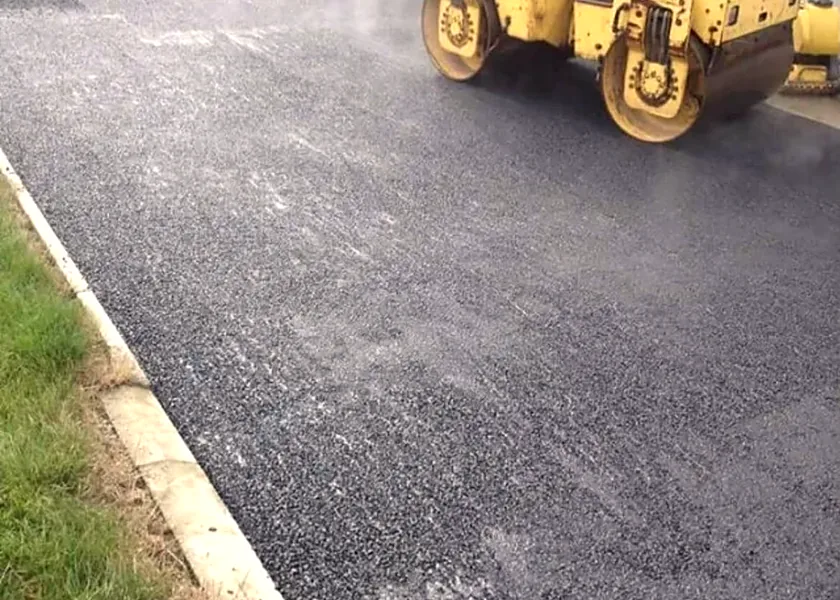
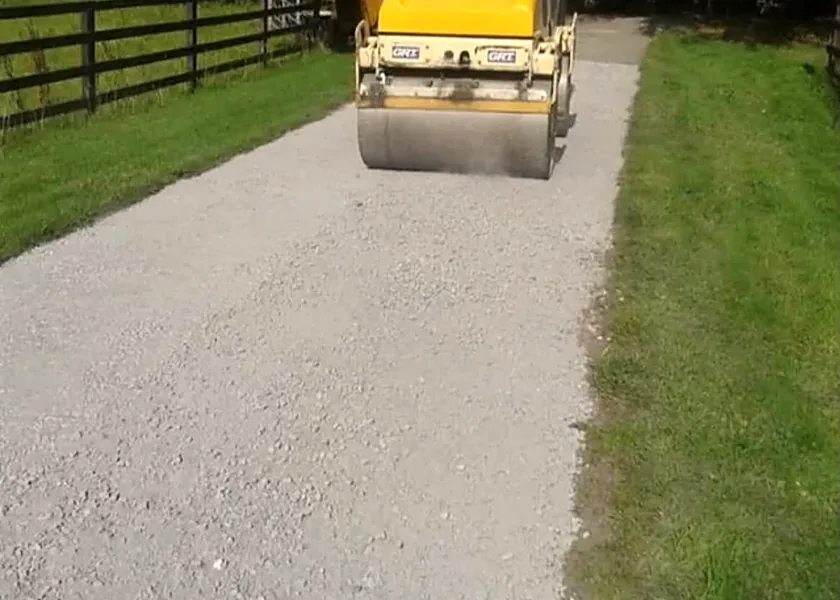
Hot tarmacadam is laid over the base and rolled to a tight, smooth finish.
We use our own machinery and supply the materials, so the job is planned and done by the same people from start to finish.
Eddie will tell you which it is
A lot of driveways that look bad only need a repair. Some that look fine on top are going underneath. You will not know for certain until someone looks at it properly. Eddie covers Kilkenny, Waterford and the rest of the South East from Mullinavat, and will come out, look at the driveway and tell you straight whether it is a repair or a relay. Quotes are free and there is no obligation.
You can read more about our tarmacadam driveways, or call Eddie on 087 120 4286.
Talk to Eddie about your driveway
Send a few details and Eddie rings you back with a free quote, anywhere across the South East.
Jobs around the South East
Get a free quote
More guides
Get a free quoteTar and chip driveway cost in Ireland
What decides the cost of a tar and chip driveway: length, base, access, chips and drainage, and how it compares with tarmacadam and gravel. Free quotes.
Tarmacadam vs block paving
Tarmacadam vs block paving on cost, look, upkeep, drainage and lifespan, and which suits a South East driveway. From Eddie, who lays tarmacadam.
Asphalt driveway cost in Ireland
Asphalt and tarmacadam are near enough the same on an Irish driveway. What decides the cost and what to look for in a quote. Free quotes from Eddie.
Tar and chip or tarmacadam: which suits a South East driveway
Tar and chip or tarmacadam: how to choose by length, budget, look, traffic and upkeep, with lanes and farm yards in mind. Eddie lays both. Free quotes.
Talk to Eddie about your driveway
Free quotes across the South East.